European Servicing Starts From $349 & Free Pink Slip W/ Any Service

Family-Owned & Operated
European Specialists
5★ Reviews
Repairs Explained Upfront

Verified 5★ Reviews

Local Clutch Specialists In Northmead

A worn clutch can leave you stranded without much warning. Our Northmead team diagnoses clutch problems accurately, explains exactly what's needed, and gets your vehicle back on the road reliably.

Euro Specialists

Honest Advice

5★ Reviews

Quality Clutch Parts

Book Your Free Inspection

Fill in the form and we'll be in touch to confirm your booking.

Booking Form
  • Vehicle Details
  • Confirm Vehicle
  • Services
  • Contact Details
No Pressure Advice
Work Explained First
Family-Run Workshop

Why Book With Us

Book Your Free Inspection
Drop Off Your Car
We Get to Work
Collect and Drive Away

A clutch is what lets you change gears smoothly in a manual car. It sits between the engine and gearbox, and every time you press the pedal it disconnects the two so you can shift. As clutch specialists at our family-run workshop in Northmead, we see clutches wear out gradually, then fail at the worst moment, often on a hill or in traffic along the Parramatta corridor. Catching the early signs saves you from a tow and a much bigger bill.

What Are the Warning Signs of a Worn Clutch?

A clutch doesn’t usually die overnight. It gives you plenty of hints first, and the trick is knowing what to listen and feel for. Here are the symptoms our customers most often describe when they bring a car in:

  • Slipping – the engine revs climb but the car doesn’t pull as hard as it should, especially uphill or when accelerating.
  • A high, spongy or soft pedal – the bite point (where the clutch grabs and the car starts to move) creeps higher toward the top of the pedal travel.
  • A burning smell – a hot, acrid odour after stop-start driving usually means the friction surface is overheating.
  • Juddering or shuddering as you pull away in first gear.
  • Difficulty selecting gears, grinding, or a clutch that won’t fully release.
  • Noises – a rattle or squeal that changes when you press or release the pedal.

If you notice any of these, it’s worth getting the clutch checked before it lets go completely. A slipping clutch left too long can also damage the flywheel, which turns a manageable job into a costly one.

What Happens During a Clutch Inspection and Repair?

We start by listening to how the car is behaving and taking it for a short drive to feel the pedal, the bite point and any slip under load. From there we assess whether the fault sits in the clutch itself or the hydraulics that operate it, such as the master or slave cylinder.

When a clutch replacement is needed, the gearbox has to come out to reach it. While we’re in there, we inspect and typically renew the full clutch kit as a set: the friction plate, the pressure plate and the release (throw-out) bearing. We check the flywheel surface for scoring or heat damage and advise whether it can be machined or needs replacing. On many European models fitted with a dual-mass flywheel, a heavier flywheel designed to smooth out engine vibration, we check for excess play before signing off. We also bleed and test the hydraulics so the pedal feels right when you drive away.

Every step is explained before we begin. If we find something that isn’t essential, we’ll tell you so and leave the choice with you. No pressure, no surprises on the invoice.

What Affects the Cost and Turnaround of a Clutch Job?

Clutch work varies more than most repairs, so an honest assessment matters. A few things influence the price and the time in the workshop:

  • Vehicle layout – front-wheel-drive cars often need subframes or driveshafts moved, which adds labour.
  • What else needs doing – a damaged flywheel, worn hydraulics or a leaking rear main seal add parts and time.
  • Parts choice – we fit quality clutch components that carry a manufacturer warranty, and on European vehicles we align to genuine or genuine-equivalent specifications so the feel and durability match the car.
  • Availability – some Euro clutch kits and dual-mass flywheels are ordered in, which can affect turnaround.

We’ll give you a clear picture up front once we’ve inspected the car. We’re not the cheapest and we don’t try to be; the focus is quality work and fair pricing that lasts.

Why Northmead Drivers Choose Star Mechanical Repairs for Clutch Work

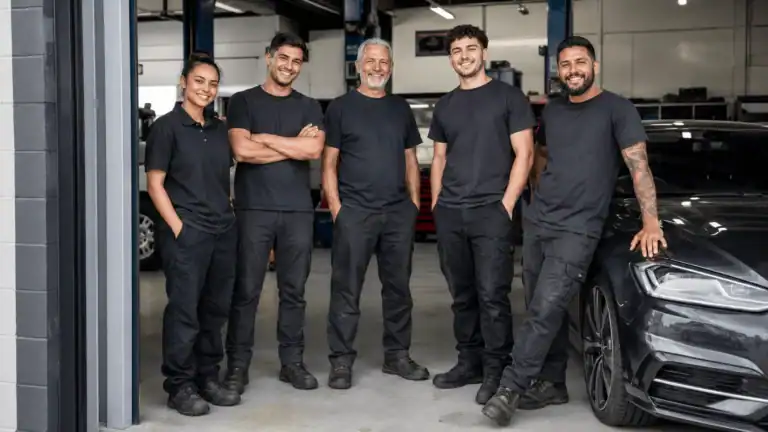
We’re an owner-operated, family-run workshop with a genuine European focus, so BMW, Mercedes, Audi and Volkswagen clutches are familiar territory rather than a guess. Owner Sarkis has been a mechanic since he was sixteen, with over a decade of hands-on experience across timing chains, transmissions, brakes and clutch systems.

That experience matters with clutches, because diagnosing whether the problem is the clutch, the hydraulics or the flywheel is where a lot of unnecessary parts get sold elsewhere. We diagnose properly, explain what we find in plain language, and only replace what needs replacing. Alongside clutch repairs we handle logbook servicing, brake systems, auto electrical and more, so we can look after the whole car.

If your clutch is slipping, dragging or feeling odd underfoot, don’t wait for it to strand you. Call Us Now for a chat about what you’re noticing, or Book Your Free Inspection online and we’ll take a proper look here in Northmead.
Other Services

Whatever your needs we have you covered, see some similar services below or click "See All Services" to explore our full service offering.

Honest Mechanics Who Know European Cars

Star Mechanical Repairs is a family-run workshop in Northmead specialising in European vehicles. Owner Sarkis brings over a decade of hands-on experience and a simple promise: quality work, honest advice, at a fair price.

European Vehicle Specialists

Deep experience with BMW, Mercedes, Audi and VW means your car is in the right hands.

No Surprises, No Pressure

Bring your vehicle in and we’ll carry out a thorough inspection before any work begins.

Clutch Work Explained Before We Start

We walk you through what’s worn and why, before any work begins.

How Clutch Repair Works at Star Mechanical

Clutch issues are best caught early, and our straightforward process gets your vehicle assessed and repaired efficiently.

Step 1

Book Your Free Inspection

Book your free inspection online or call us now to describe your clutch symptoms and lock in a time.

Step 2

Clutch System Assessment

We inspect the clutch plate, pressure plate, flywheel and hydraulics to find the exact source of the fault.

Step 3

Clutch Replacement or Repair

We fit quality replacement components and adjust the clutch pedal to manufacturer specifications before reassembly.

Step 4

Test Drive and Handover

We road-test the vehicle to confirm smooth engagement, then walk you through what was done before you collect.

Rated 4.8 Stars by Our Customers

Verified 5★ Reviews

Quality Parts From Trusted Suppliers

We source quality genuine and reputable aftermarket parts from trusted suppliers, so every repair is backed by manufacturer warranty and built to last.

Book Your Free Inspection

Fill in the form and we'll be in touch to confirm your booking.

Booking Form
  • Vehicle Details
  • Confirm Vehicle
  • Services
  • Contact Details
No Pressure Advice
Work Explained First
Family-Run Workshop

Why Book With Us

Book Your Free Inspection
Drop Off Your Car
We Get to Work
Collect and Drive Away

Common Questions, Honest Answers

Browse the questions below for straightforward answers about our services. If you can't find what you're looking for, give us a call and we'll help.

A clutch specialist focuses on the full drivetrain connection between your engine and gearbox, which means a more thorough diagnosis than a general service check. We inspect the clutch disc, pressure plate, release bearing, and flywheel as a system rather than just replacing the obvious worn part. This matters because a failing flywheel or worn fork can cause a brand-new clutch to fail early. Getting the diagnosis right the first time saves you pulling the gearbox out twice.

The most common signs are a slipping clutch (where the engine revs rise but the car doesn’t accelerate properly), a spongy or high biting point, difficulty getting into gear, a burning smell after hills or heavy traffic, or a grinding feeling when you press the pedal. Any one of these on its own is worth having inspected. Leaving a slipping clutch too long can cause heat damage to the flywheel, which turns a straightforward clutch replacement into a more involved job.

It’s not a great idea. A slipping clutch reduces your control over acceleration, which is a genuine safety concern in traffic or when merging. Beyond safety, the heat generated by a slipping clutch can score or warp the flywheel. A damaged flywheel significantly increases the cost of the repair. If you’re noticing slip, it’s worth booking an inspection sooner rather than waiting until the clutch stops working entirely.

For most passenger cars and light vehicles, a clutch replacement takes roughly half a day to a full day in the workshop. The exact time depends on the vehicle’s layout and how accessible the gearbox is. Some front-wheel-drive vehicles are straightforward; others require more dismantling to reach the clutch assembly. We’ll give you a realistic time estimate once we’ve assessed your specific vehicle, so you’re not left guessing.

Several factors influence the final price: the make and model of your vehicle, whether the flywheel needs resurfacing or replacing, the quality of parts used, and the labour time involved in accessing the clutch on your particular car. European vehicles often have more involved clutch assemblies than common Japanese or Korean models, which can affect labour time. We’ll walk you through what’s needed and why before any work begins, so there are no surprises.

Under Australian consumer law, you’re generally not required to use a dealership for servicing to keep your manufacturer warranty valid, provided the work is carried out by a qualified mechanic using appropriate parts. This is consistent with ACCC guidance on statutory warranty rights. We recommend checking your specific warranty documentation to understand any conditions that apply to your vehicle, but for most owners an independent workshop like our Northmead team is a perfectly valid choice. We treat this as general information, not legal advice.

We typically recommend replacing the clutch disc, pressure plate, and release bearing together as a kit. These components wear at similar rates, and since the gearbox needs to come out to access any one of them, replacing the set is the sensible approach. Installing a new disc against a worn pressure plate, for example, often leads to premature failure. If the flywheel shows signs of heat damage or scoring, we’ll let you know before proceeding.

Clutch life varies enormously depending on driving style, traffic conditions, and the vehicle itself. Many clutches last well beyond 100,000 km with smooth driving habits; others wear faster in stop-start commuting or with heavy towing. Riding the clutch or using it as a brake on hills accelerates wear significantly. There’s no set service interval the way there is for engine oil, so the best guide is getting it inspected if you notice any of the warning signs rather than going by kilometres alone.

We start with a test drive to assess pedal feel, biting point, and any slipping or noise. If replacement is needed, we remove the gearbox to access the clutch assembly, inspect all components including the flywheel, replace what’s needed, and check the hydraulic system if your vehicle uses a hydraulic clutch (one operated by fluid pressure rather than a cable). Everything goes back together, we road test the vehicle again, and we’ll talk you through what we found before you drive away.

Not quite. A dual-clutch transmission (sometimes called a DCT or DSG) uses two clutch packs inside an automatic-style gearbox. It shifts without a traditional clutch pedal but still relies on clutch components that can wear and need servicing. The diagnosis and repair process is different from a conventional manual clutch, and it requires specific knowledge and tooling. If you’re having issues with a dual-clutch gearbox, whether it’s shuddering at low speeds, slow shifts, or warning lights, bring it in and we’ll assess what’s going on.

Continue to site