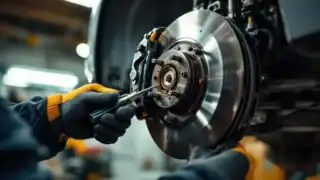
A failing driveshaft can leave your Hyundai undriveable, and catching the problem early stops you from being stranded on the road. Hyundai driveshaft repair in Northmead requires both accurate diagnosis and precise replacement to restore smooth power delivery to your wheels. Whether your vehicle is making clicking noises during turns or shuddering under acceleration, the driveshaft is often the culprit. We’ve seen plenty of Hyundai owners ignore early warning signs, only to face a complete breakdown later. Understanding what a driveshaft does and when it needs attention will save you time, money, and stress.
What Does a Driveshaft Do?
The driveshaft transfers engine power from your transmission to the rear wheels (on rear-wheel and four-wheel drive models). It’s a rotating shaft that must be perfectly balanced and free from wear to transmit power smoothly. On Hyundai models, the driveshaft assembly includes the shaft itself, universal joints (or CV joints on some variants), and bearings that support the rotating components. When any of these parts wear or fail, you’ll feel it immediately through vibration, noise, or loss of traction.
Common Signs Your Hyundai Driveshaft Needs Repair or Replacement
Most driveshaft issues announce themselves with clear symptoms. Recognising these early means you can bring your Hyundai in for inspection before a complete failure occurs.
- Clicking or clunking sounds when turning corners (typically worn CV joints)
- Vibration felt through the steering wheel or driver’s seat, especially at highway speeds
- Shuddering or jerking during acceleration or gear changes
- Loss of power delivery or feeling like the vehicle is slipping in drive
- Visible damage or corrosion on the driveshaft (rust, cracks, or dents)
- Squealing or grinding noises from underneath the vehicle
Some Hyundai models also show an illuminated dashboard warning light when the transmission or driveline sensors detect abnormal shaft operation. Don’t ignore these indicators, even if the car still drives. A failing driveshaft will worsen quickly once wear begins, and continuing to drive with a damaged shaft risks damage to the transmission and differential.
How We Diagnose and Repair Your Hyundai Driveshaft
Hyundai driveshaft repair starts with a thorough inspection. We lift your vehicle and visually examine the entire driveshaft assembly, checking for obvious damage, corrosion, or play in the joints. We then rotate the shaft by hand to feel for grinding, catching, or roughness that indicates bearing wear. If the vehicle is driveable, we also take it out for a test drive to reproduce any symptoms and assess vibration patterns.
Once we’ve identified the fault, we explain exactly what needs to happen. Some Hyundai driveshafts can be repaired by replacing individual components, such as a worn CV joint boot, bearing, or coupling. In other cases, the entire shaft has become imbalanced or cracked and requires full replacement. We use OEM-specification parts or genuine-equivalent replacements that match Hyundai’s engineering standards, ensuring your vehicle performs as designed.
Replacement involves disconnecting the driveshaft from the transmission and rear axle, carefully removing it, and installing the new or reconditioned unit. We torque all fasteners to factory specification and test the vehicle to confirm smooth operation, no vibration, and normal noise levels. The whole process is transparent. We show you the damage, explain the repair or replacement needed, and confirm the work before we start.
What Affects Repair Time and Cost for Driveshaft Work
How long and how much a Hyundai driveshaft repair takes depends on several factors. Access to the driveshaft varies between models. Some Hyundai configurations require removing the fuel tank, exhaust system, or other components to reach the shaft safely. If you need only a joint or bearing replaced, the job is faster and less costly than a full shaft replacement. If you need the entire driveshaft, parts availability affects the timeline. We carry common Hyundai driveshaft components in stock, but special or newer model variants may need to be ordered.
The condition of surrounding components also matters. If your driveshaft failed due to worn transmission mounts or suspension damage, those issues will show during inspection and may need addressing to prevent premature failure of the new shaft. We discuss any secondary concerns with you before proceeding, giving you full control over what gets done and when.
Why Hyundai Owners in Northmead Choose Star Mechanical Repairs
Star Mechanical Repairs is a family-run workshop with over a decade of hands-on mechanical experience. Owner Sarkis trained as a mechanic from the ground up and has seen every driveshaft failure pattern across multiple brands. We bring that depth of experience to every Hyundai repair, diagnosing accurately and explaining clearly so you know exactly why the work is needed.
We don’t upsell or pressure you into repairs you don’t need. If a component can be safely repaired, we say so. If it needs replacement, we explain why and source quality parts with manufacturer warranty. We charge fairly for the work. Not the cheapest, but honest value for skilled labour and reliable results. Your Hyundai won’t sit in our workshop longer than necessary, and you’ll leave knowing the job was done right.
We specialise in European vehicles, including BMW, Mercedes, Audi, and Volkswagen, and we bring that same precision to Asian brands like Hyundai. Our expertise spans timing chain replacement, brake systems, transmission service and repair, logbook servicing, auto electrical work, and more. With over 115 five-star reviews, Hyundai owners across Northmead trust us to get their vehicles back in shape.
Next Steps for Hyundai Driveshaft Repair in Northmead
If you’ve noticed clicking, vibration, or unusual noises from your Hyundai, the driveshaft is worth investigating. Book Your Free Inspection with us so we can diagnose the issue, show you what we find, and outline your options. You can also Call Us Now to discuss your symptoms and ask any questions before you come in.