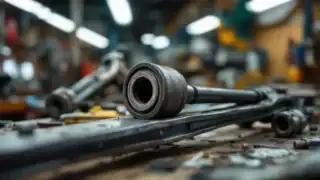
Shock absorbers on a Jeep do a critical job: they dampen the bounce and energy created when your suspension compresses over bumps, dips, and potholes. Without them working properly, your vehicle becomes unstable, harder to control, and your other suspension components wear out much faster. Jeep shock absorber replacement is a service we see regularly at our Northmead workshop, especially as vehicles age or when owners notice their ride has become noticeably rougher or bouncier than it used to feel.
Warning Signs Your Jeep Shocks Need Replacement
Unlike some mechanical problems that creep up gradually, worn shocks often announce themselves fairly clearly. If your Jeep feels like it’s bouncing excessively after you go over a bump, or if it takes several bounces to settle down instead of one smooth absorption, that’s a classic sign. You might also notice the vehicle dips or nose-dives heavily when you brake, or leans excessively through corners. The steering might feel vague or less responsive than it should, and the ride quality simply feels less planted.
- Noticeable bouncing or excessive movement after hitting bumps or potholes
- Vehicle nose-dives or squats when braking or accelerating
- Uneven or sagging suspension on one corner of the vehicle
- Clunking or knocking sounds from the suspension, especially over rough roads
- Visible fluid leaks or oily residue on the shock body itself
- Reduced control or wandering feeling, particularly in wet conditions or at speed
- Uneven tyre wear, which can result from unstable suspension geometry
Many Jeep owners delay addressing worn shocks because the vehicle still drives. But shocks don’t just affect comfort — they directly impact your ability to maintain control, especially in emergency manoeuvres or poor weather. They’re also a safety-critical component, so professional inspection is important if you’re noticing any of these symptoms.
Jeep Shock Absorber Replacement: What We Inspect and Replace
When you bring your Jeep in for shock absorber assessment, we start with a thorough visual and operational inspection. We check the shock bodies for leaks, damage, or corrosion. We compress and release each shock by hand and bounce each corner of the vehicle to feel how quickly and how completely the suspension settles. We also inspect the surrounding suspension components — mounts, bushings, springs — because a worn shock often signals that other suspension work may be needed as well.
For Jeep models, we follow manufacturer service specifications and use diagnostic procedures aligned to your vehicle’s model year and drivetrain. Jeeps often come with different suspension configurations depending on whether you’ve got a Cherokee, Wrangler, Grand Cherokee, or another variant. The shock type, mounting setup, and specification can vary, so we ensure the replacement shocks match OEM requirements or approved equivalent specs. Many Jeep owners appreciate that we explain exactly which shocks are fitted and why they’re the right choice for their particular model.
Once we’ve confirmed the shocks need replacement, the work itself involves safely lifting the vehicle, removing the old shocks, and installing new ones with all fasteners torqued to specification. We’ll typically replace shocks in pairs (front pair or rear pair) or all four at once, depending on what you’ve approved and what the inspection shows. We use quality parts with manufacturer warranty backing, so you’re not taking on risk with unknown components.
What Affects Cost and Timeline for Shock Replacement
Several factors influence how long the work takes and what you’ll invest. The vehicle’s age and model affect accessibility — some Jeep models are straightforward, others require more careful work around other suspension or body components. Whether you opt for OEM-specification Jeep shocks or quality aftermarket equivalents also plays a role; both are available, and we’ll discuss the differences transparently.
Parts availability can occasionally extend timelines, particularly for less common model variants or if you want genuine parts. However, we stock commonly needed suspension components or can source them reliably. The actual replacement work typically takes a few hours once parts are on hand, but we always confirm the timeframe with you before we start, so you know what to expect. We don’t charge surprises into your invoice — if additional suspension work becomes apparent during the replacement, we’ll explain it and get your approval before proceeding.
Why Choose Star Mechanical Repairs for Your Jeep Suspension Work
We’re a family-run workshop with over a decade of hands-on mechanical experience, and we specialise in European vehicles as well as Japanese and American models. What sets us apart isn’t cutting corners on price — it’s treating your Jeep with the same care and honesty we’d expect for our own vehicles. Every repair is explained clearly before we start work, so you understand what’s happening and why. We don’t upsell or pressure you into work you don’t need.
When it comes to suspension work, our team has the diagnostic discipline to distinguish between shocks that genuinely need replacement and minor suspension noise that might have a different cause. We use quality parts with proper warranties, torque fasteners to specification, and test-drive your Jeep before it leaves to confirm the improvement. That thoroughness is why local drivers in Northmead and the surrounding areas trust Star Mechanical Repairs with their suspension repairs.
Next Steps
If you’ve noticed any of these warning signs with your Jeep, the next step is a professional inspection. Call Us Now to discuss what you’re experiencing, or Book Your Free Inspection online. We’ll get your Jeep on a lift, check those shocks thoroughly, and let you know exactly what you’re dealing with before any work begins.