A tailshaft is the component that transfers engine power to your rear wheels, spinning constantly whenever your Great Wall is in motion. For Great Wall vehicles, the tailshaft endures significant rotational stress, and when it begins to fail, you’ll notice vibrations, clunking sounds, or a loss of drive. Great Wall tailshaft repair in Northmead requires precise diagnosis and careful handling because the tailshaft is integral to your vehicle’s drivetrain. If you’re experiencing symptoms like these, professional inspection is essential to avoid further damage to your transmission or differentials.
Common Signs Your Great Wall Tailshaft Needs Attention
Great Wall tailshaft problems often announce themselves before they become catastrophic. If you feel a rhythmic vibration that increases with speed, especially noticeable in the middle of your vehicle, your tailshaft may be imbalanced or developing bearing wear. A clunking or banging sound when you accelerate hard or shift gears is another red flag, typically indicating worn universal joints or centre bearing failure. Some drivers report a loss of power transmission to the rear wheels, or notice their vehicle feels less responsive when accelerating.
- Vibration felt through the cabin or steering wheel at highway speeds
- Clunking or banging from underneath the vehicle during acceleration
- Whining or grinding noises from the rear axle area
- Visible rust, corrosion, or scoring on the shaft itself
- Play or movement in the tailshaft when you grasp it by hand
- Vehicle pulling to one side or feeling unstable during cornering
These symptoms develop gradually, so catching them early prevents expensive secondary damage. A worn tailshaft places extra load on your transmission and differential, potentially leading to costlier repairs down the line.
How We Diagnose and Repair Great Wall Tailshaft Issues
Diagnosing a Great Wall tailshaft problem begins with a thorough visual inspection and a test drive to reproduce the symptom under controlled conditions. We examine the shaft for visible cracks, corrosion, or impact damage, then check the universal joints and centre bearing for play and wear. For Great Wall models, we pay particular attention to the bearing assembly, which is a common wear point on these vehicles, and verify that the shaft is properly balanced.
Once we’ve identified the issue, we determine whether repair or replacement is the best path forward. Minor damage to universal joints can sometimes be addressed by replacement of the joint itself, while severe corrosion or impact damage to the shaft tube typically requires full tailshaft replacement. We use Great Wall-specification parts or quality equivalent replacements that meet OEM standards, ensuring your vehicle performs reliably after repair.
The repair process involves safely removing the tailshaft, inspecting all connected components like the transmission output and differential input flanges, and installing the repaired or replacement shaft with precise alignment. Proper alignment is critical; even small angular errors can reintroduce vibration or cause premature bearing wear. We test-drive every vehicle after completion to confirm the symptom has resolved and that no new issues have been introduced.
What Influences Tailshaft Repair Cost and Timeframe in Northmead
The cost of Great Wall tailshaft repair varies based on whether the shaft can be repaired or must be replaced entirely. A universal joint replacement typically costs less than a full shaft replacement because the work is less extensive and parts availability is simpler. Availability of Great Wall replacement shafts can affect timeframe, as some shafts are special-order items rather than stock parts for independent workshops.
Severity of damage also plays a role. A shaft with minor universal joint wear can sometimes be addressed in a single day, while a corroded or impact-damaged shaft may require ordering replacement components and can take longer. The complexity of removal and reinstallation depends on your Great Wall model and whether other components have been affected by the failing shaft.
We discuss parts options with you upfront, explaining whether we recommend genuine Great Wall parts or quality-equivalent replacements. Our transparent approach means you’ll understand the cost before work begins, with no surprises or pressure to upgrade unnecessarily.
Why Star Mechanical Repairs Handles Great Wall Tailshaft Repairs with Care
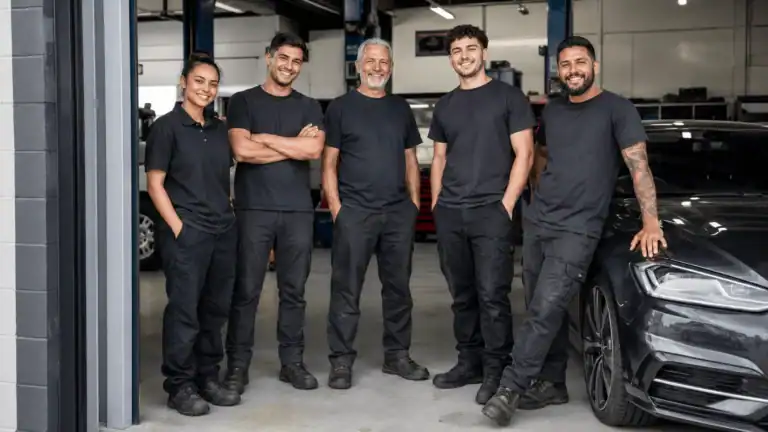
We’re a family-run workshop with over a decade of hands-on mechanical experience, and we treat every tailshaft repair as a precision job rather than a quick turnaround task. Owner Sarkis understands the importance of alignment and balance, qualities that separate a quick fix from a lasting repair. Our team explains exactly what we find and why the repair is necessary, ensuring you’re never upsold on work you don’t need.
We specialise in European vehicles, and while we work on a broad range of makes, that precision-focused mindset carries through to every service. We use quality parts with manufacturer warranty, giving you confidence that your tailshaft repair will hold up. We don’t compete on being the cheapest option; we compete on honest advice, fair pricing, and transparent communication from start to finish.
Next Steps for Your Great Wall
If your Great Wall is vibrating, clunking, or losing drive, don’t delay. Tailshaft problems worsen quickly and can damage your transmission or differential if left unaddressed. Call Us Now to describe what you’re experiencing, or Book Your Free Inspection online. We’ll diagnose the issue, explain your options, and get your vehicle back to smooth, reliable operation in Northmead.