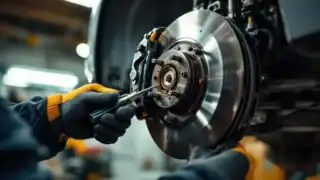
A failing tailshaft is one of those problems that starts quietly and gets worse fast. Your Hyundai relies on the tailshaft to transfer power from the transmission to the rear wheels, and when it develops play, damage, or misalignment, you’ll feel it through the whole car. Hyundai tailshaft repair in Northmead is something we handle regularly, and catching the issue early can save you from a breakdown that leaves you stranded. Unlike some generic suspension or steering jobs, a tailshaft problem is specific enough that diagnosis matters as much as the fix.
What Does a Tailshaft Do and Why It Fails
The tailshaft is a hollow metal tube that runs from the gearbox to the differential at the rear axle. It’s supported by bearings and connected via flexible couplings or constant velocity joints depending on your Hyundai model. Over time, the bearings wear, the couplings fatigue, or rust and corrosion weaken the shaft itself. Some Hyundai models are more prone to centre bearing wear than others, especially if the vehicle has been driven with heavy loads or towing.
Unlike a timing belt or brake pads, a tailshaft doesn’t follow a scheduled replacement interval. You only need repair when symptoms show up. The problem is that ignoring early warning signs often means the damage spreads to the differential, and then you’re looking at a much bigger job.
Common Warning Signs You Need Hyundai Tailshaft Repair
- Vibration or shuddering felt through the floor or seat, especially when accelerating or at highway speeds
- A clunking or knocking sound from underneath the car, particularly when you change gear or go over bumps
- Visible play or movement in the shaft when you get under the vehicle
- A grinding noise that gets worse with speed
- The rear end feeling loose or the car pulling to one side under acceleration
These symptoms can overlap with other driveline issues, which is why a proper inspection matters. A worn engine mount might feel similar to a bad tailshaft, and centre bearing failure looks like a suspension problem if you’re not listening carefully.
How We Diagnose and Repair Hyundai Tailshaft Issues
Our first step is getting the car on the hoist and visually inspecting the entire tailshaft for damage, rust, or obvious wear. We’ll spin the wheels and listen for noise, then check for play between the shaft, couplings, and bearings. On Hyundai models with centre bearings, that bearing is often the culprit, and we’ll measure runout and movement to confirm.
Once we’ve identified the exact problem, we’ll explain what we’ve found before we start any work. Sometimes a tailshaft can be repaired if the damage is isolated to the couplings or bearings. Other times, especially if the shaft itself is bent or severely corroded, replacement is the only reliable option. We use OEM-specification parts for Hyundai repairs, so you know the replacement will sit properly and perform as designed.
The actual repair or replacement involves removing the drive shaft, disconnecting it from the gearbox and differential, and then either repairing the bearings and couplings or fitting a new shaft. Once installed, we recheck everything and take the car for a test drive to confirm the vibration is gone and the driveline feels solid again.
What Affects Cost and Turnaround Time
The main variable is whether you need just bearing or coupling replacement, or a full shaft swap. Bearing and coupling repairs are faster and less expensive because we can often work with the existing shaft. A full replacement takes longer because the new part needs to be ordered if we don’t have it in stock, and the installation and balancing take more care.
Parts availability depends on your specific Hyundai model and year. Newer vehicles tend to have faster lead times, while older models can take a bit longer. We’ll always let you know upfront how long you’re looking at and what the parts will cost before we proceed.
The condition of surrounding components matters too. If the differential has been damaged by a failing tailshaft, you might need work there as well. We’ll inspect that as part of the job and tell you honestly if there’s more involved than initially obvious.
Why Choose Star Mechanical Repairs for Hyundai Tailshaft Repair in Northmead
Star Mechanical Repairs is a family-run workshop with over a decade of hands-on experience in European vehicles and Asian brands including Hyundai. We understand how Hyundai drivetrains are designed and what typically goes wrong with them. That knowledge saves you time in diagnosis and helps us recommend the right fix, not an unnecessary one.
We don’t upsell, and we don’t pressure you into work you don’t need. Every repair is explained clearly before we start, so you know exactly why the tailshaft is failing and what fixing it involves. We use quality parts backed by manufacturer warranty, and we stand behind the work we do.
Owner-operated since day one, we bring genuine mechanical experience to every job. You’re not dealing with a chain store where the technician might be seeing your model for the first time. You’re working with people who know Hyundai vehicles inside out and care about getting it right. Our 4.8-star rating from over 115 five-star reviews reflects that commitment to honest, quality work.
Get Your Hyundai Tailshaft Checked at Our Northmead Workshop
If you’re hearing vibration, clunking, or feel something loose in the driveline, don’t wait for the problem to get worse. Book Your Free Inspection with us at our Northmead workshop, or Call Us Now to describe what you’re experiencing. We’ll get you in quickly, diagnose the issue properly, and explain your options before any work begins.