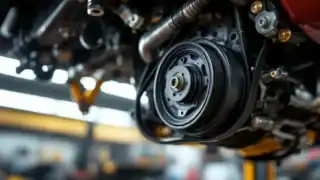
A CV axle is the shaft that connects your Land Rover’s transmission to the wheels, allowing power to flow while the suspension moves and the wheels turn. When a Land Rover CV axle replacement becomes necessary, it’s usually because the protective rubber boot has torn, allowing grease to leak out and dirt to contaminate the joint. Left unchecked, this leads to clicking sounds, vibration during turns, and eventually a seized joint that can leave you stranded. We’ve seen this issue regularly in Land Rover models across the Northmead and Parramatta area, and catching it early saves time and money.
Common Signs Your Land Rover Needs CV Axle Replacement
The symptoms of a failing CV axle or joint are usually pretty clear once you know what to listen and feel for. Most drivers first notice a rhythmic clicking or popping sound when turning corners, especially at slow speeds. This is the worn CV joint protesting under load. You might also feel vibration through the steering wheel or the floor when accelerating, or notice that one side of the car feels slightly less responsive during turning.
Grease stains on the inside of your wheel or a visible split in the rubber CV boot are physical red flags. If you see boots that are cracked or leaking, the joint inside is already starting to wear. Some owners report a clunking sensation when shifting between drive and reverse, or pulling sensation when accelerating hard. In wet conditions or on tight turns, the problem often becomes more obvious.
Land Rover models, particularly the Discovery and Range Rover sport variants, can be prone to CV boot wear if the protective rubber isn’t regularly inspected during service. That’s why we make it part of our standard checks on every Land Rover that comes in.
How Land Rover CV Axle Replacement Works
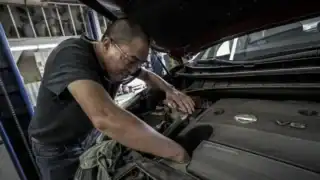
The process starts with a proper diagnostic inspection. We safely lift your Land Rover and spin the wheels by hand while listening and feeling for play or resistance in the joints. We visually check the condition of both the inner and outer CV boots on each axle shaft. If a boot is torn but the joint itself is still intact, sometimes we can save money by replacing just the boot and regreasing the joint, depending on how much wear has already occurred.
More commonly, once a CV joint has been running without adequate grease, the races and ball bearings inside begin to pit and wear. At that point, the entire CV axle assembly needs to be replaced. We remove the wheel and brake components as needed to access the axle, then disconnect it from both the transmission side and the wheel hub. Once the old axle is out, we fit a new one, reconnect it securely, and verify that everything is tight and functioning properly.
For Land Rover vehicles, we use genuine or manufacturer-equivalent CV axles that match the OEM specifications for your model. This matters more than many drivers realise because aftermarket axles of poor quality can cause vibration issues or premature wear in the transmission. We test the steering and suspension movement through its full range to confirm the new axle operates smoothly.
If only the CV boot needs replacement, the process is similar but less invasive. We clean the joint thoroughly, fit a new boot, pack it with the correct grease specification, and secure it properly to prevent re-contamination. The type of grease matters; Land Rover joints have specific requirements, and we always use the right product.
What Affects Cost and Turnaround Time
Several factors influence how much time and cost you’re looking at. The most obvious is whether you need a full axle replacement or just a boot repair. A boot replacement is quicker and cheaper, but it only works if the joint inside hasn’t been damaged yet. Once we inspect it, we’ll tell you exactly what we find.
Parts availability can vary depending on your specific Land Rover model and whether parts are in stock. We hold common CV axle assemblies, but if your model is less common, sourcing might add a day or two. Whether you choose genuine Land Rover parts or quality aftermarket equivalents also affects cost; we’ll explain the trade-offs before we begin.
Vehicle type matters too. Some Land Rover models have easier access to the CV axles than others, which changes labour time. We’ll give you a realistic timeframe once we’ve assessed the damage.
Why Star Mechanical Repairs for Your Land Rover CV Axle Work
We’re a family-run workshop in Northmead, and we specialise in European vehicles including Land Rover. Owner Sarkis has over a decade of hands-on mechanical experience, and that shows in how we approach every job. We don’t upsell or pressure you into repairs you don’t need. If we find a worn CV boot that can still be repaired, we’ll tell you that’s an option. If the joint is damaged and replacement is necessary, we’ll explain why and what you can expect.
Every repair comes with parts that carry a manufacturer warranty, giving you confidence that the work will last. We explain what we find and what we’re doing in clear language before we start work, so you’re never guessing what’s happening to your car. Our experience with Land Rover vehicles means we understand the specific demands these vehicles place on their CV systems, and we know how to get the best longevity from replacement parts.
Book Your Land Rover CV Axle Inspection in Northmead
If you’ve noticed clicking sounds, vibration, or visible CV boot damage, the next step is a proper inspection. Book Your Free Inspection online or Call Us Now to get your Land Rover assessed by someone who knows these vehicles inside out.