Your Toyota’s cooling system relies on radiator fluid to transfer heat away from the engine and keep temperatures stable. Over time, that fluid breaks down from heat, oxidation, and accumulated contaminants. A Toyota radiator flush removes old coolant and replaces it with fresh fluid that meets Toyota’s OEM specifications, helping your engine run at the right temperature and protecting against corrosion inside the cooling passages. This isn’t just about keeping your Toyota cool on a hot day — it’s about preventing overheating, head gasket failure, and expensive engine damage down the track.
When Does Your Toyota Need a Radiator Flush?
Toyota’s logbook servicing schedule typically recommends a coolant change every 40,000 to 100,000 kilometres, depending on your model year and whether you’re running standard or long-life coolant. However, some warning signs shouldn’t wait for the next scheduled service. If you notice your temperature gauge creeping toward the hot end, smell sweet-smelling liquid near the engine bay, or see coloured fluid pooling under the car, these are signs the cooling system needs attention soon. We see these issues regularly at our Northmead workshop and know the damage that delayed maintenance can cause.
Other indicators include:
- Radiator hose feeling soft or mushy when gently squeezed (indicates deteriorating coolant)
- Discoloured or murky coolant visible through the overflow tank
- Engine running hotter than normal, especially in traffic or on hills
- Heater blowing less warm air than it should in winter
- White or milky coolant, suggesting water contamination
Toyota engines are built to tight tolerances and respond well to preventive care. Sticking to flush intervals keeps the cooling system efficient and your engine protected from the kind of heat stress that can crack a head or warp the block.
What Happens During a Toyota Radiator Flush
We start by inspecting the entire cooling system. Our technicians check hose condition, clamp security, and the radiator itself for any signs of leaks or blockages. We then run a diagnostic to confirm the current coolant condition and check your Toyota’s temperature readings to rule out thermostat faults or other issues that might be masking the real problem.
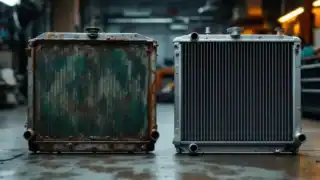
The flush itself uses a coolant exchange machine that safely drains old fluid from the radiator, engine block, heater core, and expansion tank without introducing air into the system. Once empty, we flush the entire circuit with water or a flushing solution to remove rust scale and sediment built up over years of service. This step is crucial — trapped debris can block narrow passages in the engine and radiator and cause overheating later.
After flushing, we refill with fresh coolant that meets Toyota’s specification. Different Toyota models may use different coolant types (red, pink, or blue), and we make sure to use the correct one for your vehicle. We then bleed air from the system, check for leaks, run the engine to operating temperature, and confirm the gauge reads normally and the fans operate as expected.
Why Toyota-Specific Coolant Matters
Toyota engines have specific cooling requirements. Using the wrong coolant type or mixing brands can cause compatibility issues, reduce protection against corrosion, or affect heat transfer efficiency. We stock genuine Toyota coolant and equivalent-spec products that meet the same standards, so your engine gets the protection it was designed for. This is one of the details that separates a proper Toyota radiator flush from a generic one.
What Affects Cost and Time for Your Toyota Radiator Flush
A straightforward Toyota radiator flush typically takes 1 to 1.5 hours, depending on the model and how much sediment needs to be cleared. If the system is heavily contaminated or hoses need replacement, the job can take longer. We’ll assess that during inspection and let you know what’s needed before we start work.
Cost varies based on whether you choose genuine Toyota coolant or an equivalent aftermarket product that meets the same specification. Both carry manufacturer warranty. If additional issues emerge during inspection — a leaking hose, a stuck thermostat, or a deteriorating water pump — we’ll explain those separately and discuss options with you before proceeding. There’s no surprise upselling; we tell you what the system needs and why.
Why Choose Star Mechanical Repairs for Your Toyota’s Cooling System
We’re a family-run workshop that specialises in European vehicles, but we’ve built solid expertise across Japanese brands including Toyota. Our owner has been a mechanic for more than a decade and has hands-on experience diagnosing and repairing cooling systems, timing chains, brakes, transmissions, and logbook servicing. We pride ourselves on honest, transparent advice. You won’t be upsold or pressured; you’ll be told exactly what your Toyota needs and why.
Every repair is explained clearly before we start work. If a flush is all that’s needed, that’s what we’ll do. If the thermostat is sticking or a hose is starting to crack, we’ll show you why it matters and give you the choice to address it now or monitor it. We use quality parts with manufacturer warranty, and we stand behind our work. Our customers have given us 4.8 out of 5 stars across more than 115 reviews because we deliver on that promise.
Get Your Toyota’s Cooling System Checked in Northmead
If your Toyota’s cooling system hasn’t been serviced recently, or you’ve noticed any of the warning signs above, book your free inspection now. We’ll run a full diagnostic, show you exactly what’s happening, and discuss the best path forward. Book Your Free Inspection online or Call Us Now. We’re here to keep your Toyota running reliably for years to come.