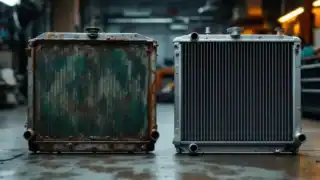
A Toyota radiator repair is often one of those services that catches owners by surprise, yet it’s critical to keeping your engine running at the right temperature. Your radiator is a heat exchanger that pulls warmth away from your engine coolant and dissipates it into the air. When it fails, leaks, or becomes clogged, your engine temperature climbs quickly, risking serious damage. If you’ve noticed coolant pooling under your car, noticed steam from under the bonnet, or seen the temperature gauge creeping into the red zone, your Toyota’s cooling system is telling you something needs attention. We see Toyota radiator repairs regularly at our Northmead workshop, and catching the problem early can save you from a much costlier engine repair down the track.
What Are the Signs Your Toyota Radiator Needs Repair?
Your Toyota radiator rarely fails without warning. Most owners notice one or more of these symptoms before a complete breakdown:
- Visible coolant leaks underneath the car (bright green, orange, or pink fluid)
- Temperature gauge sitting higher than normal or drifting into the red
- Steam or mist coming from under the bonnet
- Weak or no heat from the heater in winter
- Coolant level dropping between services
- Radiator fins bent, corroded, or blocked with debris or bugs
- Sweet smell coming from the engine bay (indicates coolant leaking)
- Engine overheating on short drives or in traffic
Older Toyotas can also develop internal radiator corrosion, where the core gradually clogs with rust and sediment. You might not see a dramatic leak, but coolant flow slows, and the engine struggles to shed heat. If your Toyota is 10+ years old and uses the original radiator, this is worth checking even if symptoms are subtle.
How We Diagnose and Repair Your Toyota’s Radiator
Our process starts with listening to you. We ask where you noticed the problem, whether the overheating is constant or happens under certain conditions (stop-start traffic, highway driving, towing), and what the coolant looks like. Then we move to a physical inspection.
We check the radiator cap first, since a faulty cap won’t hold pressure and coolant will escape. Next, we visually inspect the radiator core for obvious damage, leaks, corrosion, or blockages. We check hose connections and clamps around the radiator and upper/lower hose runs, as leaks often occur where the radiator meets the hoses rather than the radiator itself. We also inspect the radiator fan and its electrical connections, because if the fan doesn’t engage when the engine heats up, the radiator can’t do its job even if it’s in good condition.
For Toyota vehicles, we use the manufacturer’s coolant specifications as our guide. Toyota radiators are typically filled with either Toyota Red Coolant or Long-Life Pink Coolant, depending on your model year. Using the wrong coolant type or a generic green coolant can cause internal corrosion and sludge buildup, so we’re careful to match Toyota’s exact requirements. If the radiator needs replacement, we source OEM-specification radiators or quality equivalent parts with manufacturer warranty, never off-the-shelf generics that may not fit Toyota’s cooling circuit properly.
If the radiator is leaking but otherwise sound, we can sometimes repair smaller pinhole leaks with a seal additive or local repair. However, if the core is damaged, corroded, or internally clogged, we’ll recommend a replacement. We explain the difference between new, reconditioned, and aftermarket radiators so you understand what you’re paying for and why we’re recommending a particular option.
What Affects Cost and How Long Will It Take?
A Toyota radiator repair’s complexity depends on a few things. If it’s a simple hose clamp leak or a faulty radiator cap, the fix is quick and inexpensive. If the radiator itself needs replacement, cost rises because radiators vary in price across Toyota models, and labour time depends on how many other components have to come out to access it. Some Toyota radiators sit behind other engine components, meaning extra time to carefully remove and reinstall surrounding parts without damage.
Aftermarket radiators are typically less expensive but may not have the exact fitment or durability of Toyota OEM parts. OEM radiators carry a longer lifespan and manufacturer warranty. We’ll give you options upfront so you can choose based on your budget and how long you plan to keep the car.
Labour time usually ranges from 1 to 3 hours depending on accessibility. We’ll discuss timing with you before we start, so you know whether to arrange alternate transport or if you can wait on site. Coolant quality and type also factor in, since using the correct Toyota-spec coolant protects the new radiator and the rest of your cooling system.
Why Trust Star Mechanical Repairs for Your Toyota Radiator Repair in Northmead?
We’re a family-run workshop with over a decade of hands-on mechanical experience. While we specialise in European vehicles like BMW, Mercedes, Audi, and Volkswagen, we have solid expertise across Japanese brands including Toyota. Our owner Sarkis brings a straightforward, transparent approach to every repair. We explain what your radiator needs, why, and what each option costs before any work begins. No upselling, no pressure, no surprises on the bill.
We use quality parts with manufacturer warranty whenever possible, and every repair is explained clearly so you understand exactly what we’ve done and why. Your Toyota gets the same care and attention to detail we give to every vehicle in our workshop, regardless of brand or model. With over 115 five-star reviews, we’ve built our reputation on honest workmanship and transparent communication with every customer who walks through our door.
Next Steps
If you’ve noticed any of the symptoms above, don’t wait for an overheating crisis. Call Us Now to describe what’s happening, or Book Your Free Inspection online so we can diagnose the issue and show you exactly what your Toyota needs. We’re here to help you keep your car reliable without the stress.