Subaru brake replacement is one of the most important maintenance tasks you’ll face as a Subaru owner. Your brakes are what stop your vehicle safely, and when they start to wear or fail, the consequences can be serious. At Star Mechanical Repairs in Northmead, we inspect and replace Subaru brake systems regularly, and we’ve seen firsthand how critical it is to catch brake problems early. Whether you’re noticing a warning sign or your Subaru is due for scheduled brake service, understanding what’s involved helps you make the right decision for your safety and your car.
When Do You Need Subaru Brake Replacement?
Your brakes don’t always announce themselves with a sudden failure. Most brake wear happens gradually, and learning to recognise the early signs means you can replace pads or rotors before damage spreads to more expensive components. Subaru models like the Forester, Outback, Impreza, and WRX all follow similar brake wear patterns, though driving style and conditions in the Northmead and Parramatta area affect how quickly pads wear.
Common warning signs that your Subaru needs brake work include:
- A high-pitched squealing sound when braking, especially in the morning or after rain
- A grinding noise, which signals pads are worn through to the rotor
- Soft or spongy brake pedal that requires more pressure to stop
- The brake warning light appearing on your dashboard
- Vibration or pulsing through the pedal when braking at speed
- Uneven braking or pulling to one side
If your Subaru is approaching 50,000 to 70,000 kilometres, front brake pads are often due for replacement depending on your driving habits. Rear brakes typically last longer but should be inspected every service. Subaru’s logbook servicing schedule outlines recommended inspection intervals, and we follow those guidelines to keep your vehicle safe and your warranty intact.
What Happens During a Subaru Brake Inspection and Replacement
We don’t just replace brake pads and send you on your way. A proper Subaru brake replacement starts with a full inspection to understand what’s actually worn and what condition the rest of the system is in.
Our process begins with a visual inspection of all four wheels, checking pad thickness, rotor condition, and brake fluid level. For Subaru vehicles, we use diagnostic equipment that reads the brake system’s electronic sensors and ABS status, making sure we catch any issues the warning lights might be signalling. Many Subarus use dual-piston brake calipers and ventilated rotors designed to handle the demands of the brand’s all-wheel-drive engineering, so we inspect these components specifically for wear patterns that are common to Subaru’s brake design.
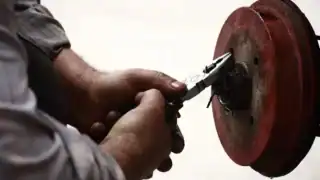
Once we know what needs replacing, we explain the findings clearly before any work starts. If pads are worn but rotors are still good, we replace just the pads. If rotors are scored, warped, or damaged, we machine or replace them. We also inspect brake hoses for cracks, check brake fluid condition and flush it if necessary, and test the ABS and electronic brake systems. For Subaru models with rear drum brakes, we inspect brake shoes and wheel cylinders the same way.
Throughout the job, we use quality parts that match Subaru’s specifications. Many owners ask whether we use genuine Subaru parts or equivalent aftermarket components. We offer both options and explain the difference in cost and warranty coverage, so you decide what’s right for your budget and vehicle.
What Affects Brake Replacement Cost and Time
Several factors influence how much your Subaru brake replacement will cost and how long the work takes. The biggest variable is what actually needs replacing. A simple brake pad change takes one to two hours per axle, while replacing pads, rotors, and calipers can take significantly longer. Parts availability affects timing too; genuine Subaru parts sometimes need to be ordered, whereas quality equivalent parts are often in stock.
Your Subaru model also matters. A Forester’s brake system differs slightly from an Impreza’s, and WRX models often have higher-performance braking hardware that requires careful handling. Whether you choose OEM-equivalent or genuine Subaru components will also influence cost. We stock quality parts with manufacturer warranty backing, so you’re not sacrificing reliability by choosing a non-genuine option.
We’ll always give you a clear estimate before starting work and explain any costs honestly. Brake work isn’t where we cut corners or suggest unnecessary parts. If your rotors are still safe, we’ll tell you that. If they need replacement, we’ll explain why and show you the damage.
Why Subaru Owners Choose Star Mechanical Repairs for Brake Work
Brake safety isn’t negotiable, and we treat every inspection and replacement with that seriousness. Our owner, Sarkis, has over a decade of hands-on mechanical experience and has built the workshop to specialise in European vehicles and the complex systems that come with them. That expertise extends to Subaru’s electronically integrated brake systems, ABS sensors, and all-wheel-drive brake balance.
We’re a family-run workshop, not a chain. That means your car isn’t just a ticket number. We listen to what you’ve noticed, explain what we find, and never push work you don’t need. Our reputation is built on honest advice, quality parts, and transparent pricing. With over 115 five-star reviews, owners in Northmead and across the wider area trust us with their vehicle safety.
Every repair is explained clearly before work begins. You’ll know exactly what your Subaru needs, why, and what it will cost. We also make sure your brake work fits with your broader service history, so nothing gets missed at the next logbook service.
Book Your Subaru Brake Replacement in Northmead
If you’ve noticed any brake warning signs or your Subaru’s brakes are due for inspection, don’t wait. Safe brakes are non-negotiable. Call Us Now to discuss what you’ve noticed, or Book Your Free Inspection online and we’ll give you a full picture of your brake system’s condition. We’re here to keep you and your Subaru safe on the road.