Renault brake specialist work in Northmead focuses on keeping your Renault safe and responsive on the road. Brakes are your car’s most critical safety system, and Renault vehicles have specific brake architectures, fluid requirements, and wear patterns that differ from other European marques. Whether you’re driving a Clio, Megane, Scenic, or Koleos, understanding what’s happening with your brakes and when to have them inspected can mean the difference between confident stops and costly emergency repairs.
When Do You Need Renault Brake Service?
Brake problems rarely announce themselves with a single dramatic sign. Most Renault owners first notice something is off through one of these warning signals:
- A soft or spongy brake pedal that requires more pressure than usual to stop the car
- A grinding or metallic noise when braking, especially during light stops or wet conditions
- Brake pads wearing unevenly, visible as thinner material on one side of the wheel
- A pulsing sensation through the pedal when braking hard, which often signals uneven rotor wear
- The brake warning light on your dashboard, which can indicate pad wear sensors or fluid pressure issues
- Longer stopping distances than normal, even though the pedal feels firm
- A squeaking or squealing sound that appears and disappears with temperature changes
Renault vehicles also follow specific brake service schedules outlined in their logbook. Most Renault models recommend a brake fluid change every two years or 40,000 kilometres, whichever comes first. Brake pads typically need inspection at 20,000-40,000 kilometre intervals depending on your driving style and conditions. If you’re regularly driving in heavy traffic or on hilly terrain, brake wear accelerates faster. The key is not to ignore these intervals, especially on French-built vehicles where hydraulic precision matters.
What Our Brake Inspection and Service Includes
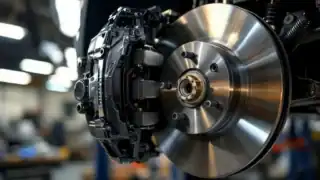
A proper Renault brake specialist inspection goes beyond simply looking at how much pad material remains. We measure rotor thickness, check caliper movement, inspect brake lines for corrosion or damage, and test hydraulic fluid condition. For Renault models, this includes verifying that ABS sensors and brake-assist systems are functioning correctly, as these components integrate directly with your stopping performance.
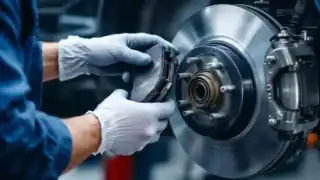
Our process starts with a full visual inspection under the vehicle. We remove wheels to examine pad thickness on all corners, measure rotor surfaces for uneven wear or warping, and look for signs of fluid leaks around calipers and brake lines. We test your brake fluid using a moisture analyser, as Renault’s hydraulic systems are sensitive to water absorption that accumulates over time. If fluid has degraded, we replace it with specification-correct fluid to restore braking response.
If pads need replacement, we fit quality pads that meet or exceed Renault’s OEM specifications. We clean and inspect calipers for sticking pistons or debris, and measure rotor runout (the amount of wobble in the rotor) to verify smooth, even braking. If rotors are worn or damaged beyond safe limits, we replace them rather than resurface them, as modern Renault brake systems require precision fit and proper thickness tolerances for ABS function.
Throughout this work, we explain what we find and why it matters. If your brakes are safe for another 10,000 kilometres, we’ll tell you that. If a component needs replacing now, we show you the worn part and discuss your options for OEM or equivalent-quality replacements. No guesswork, no pressure to replace parts that don’t need it.
What Affects Brake Service Cost and Timeline in Northmead
The cost of Renault brake work depends on several real factors. First is what actually needs replacing. Brake pad replacement alone is straightforward and relatively affordable. Adding rotor replacement or fluid flush increases the job scope. Second is parts availability. Genuine Renault brake components are usually in stock at our Northmead workshop, but sourcing OEM items for older or less common Renault models occasionally takes extra time.
Labour time varies too. A brake pad and fluid service typically takes 2-3 hours depending on how much corrosion or seized components we encounter. If rotors need turning or replacement, or if brake lines require flushing, the job takes longer. We’ll give you a clear timeframe once we’ve done the inspection.
We use quality parts with manufacturer warranties rather than cutting costs with budget alternatives. This protects both your safety and your investment in the vehicle. Brake work is not the place to compromise.
Why Choose Star Mechanical Repairs for Renault Brake Work
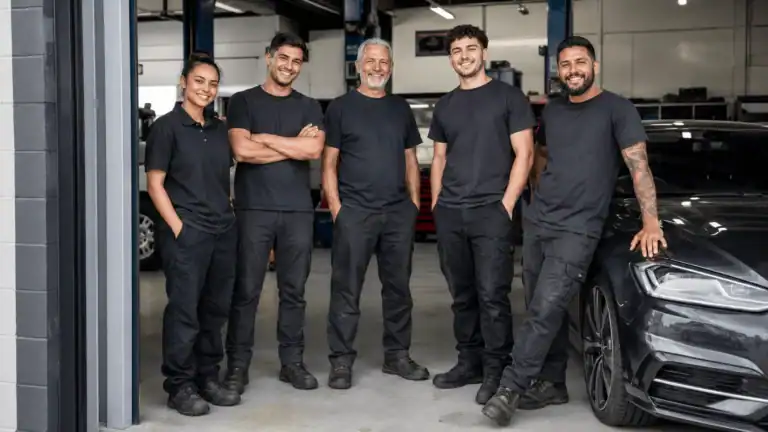
Star Mechanical Repairs has spent over a decade specialising in European vehicles, including Renault. We understand the particular requirements of Renault braking systems, from the dual-circuit hydraulics in older models to the integrated ABS and stability control in newer Scenic and Koleos vehicles. We’re owner-operated and family-run, not a franchise, so you get direct access to experienced hands-on mechanics who care about getting the job right rather than rushing through jobs.
Our reputation rests on honest advice and transparent communication. We explain what your brakes need, show you the worn components, discuss options, and never pressure you into unnecessary work. Every Renault brake repair is explained clearly before we start, and you’ll know exactly what we’ve done and why.
Brakes are too important for guesswork or generalist servicing. When you need a Renault brake mechanic who understands your specific vehicle and puts safety first, that’s what we do.
Book Your Brake Inspection Today
If you’ve noticed any of the warning signs above, or if your Renault is due for its scheduled brake check, book your free inspection with us. Call Us Now or Book Your Free Inspection online to arrange a time that suits you.