European Servicing Starts From $349 & Free Pink Slip W/ Any Service

Family-Owned & Operated
European Specialists
5★ Reviews
Repairs Explained Upfront

Verified 5★ Reviews

Local Honda Brake Specialist In Northmead

Honda brake problems need expert attention. We inspect, diagnose and repair your brakes thoroughly in Northmead, explaining everything clearly before we start.

Euro Specialists

Honest Advice

5★ Reviews

Honda Brake Diagnostics

Book Your Free Inspection

Fill in the form and we'll be in touch to confirm your booking.

Booking Form
  • Vehicle Details
  • Confirm Vehicle
  • Services
  • Contact Details
No Pressure Advice
Work Explained First
Family-Run Workshop

Why Book With Us

Book Your Free Inspection
Drop Off Your Car
We Get to Work
Collect and Drive Away

Brake problems in a Honda demand attention fast. Whether you drive a Civic, CR-V, Accord, or Jazz, your brakes are one of the few systems where a failure can turn a routine drive into a dangerous moment. A Honda brake specialist in Northmead needs to understand not just brakes in general, but how Honda’s brake systems are engineered, how they degrade under real Australian driving, and what warning signs tell you it’s time to act. Star Mechanical Repairs has spent over a decade working on vehicles large and small, and that same diagnostic rigour carries through to every Honda that comes into our workshop. We don’t guess at brake problems, and we don’t sell you parts you don’t need.

Common Honda Brake Warning Signs

Brake problems rarely announce themselves with a bang. Most start as subtle changes that are easy to ignore until they become serious. Knowing what to listen and feel for means you can catch issues early, before they cost more or put you at risk.

  • Soft or spongy brake pedal: Your pedal feels like it’s sinking toward the floor, or requires more travel before the brakes engage. This often signals air in the brake lines or a failing master cylinder, both common in Honda vehicles as they age.
  • Brake pedal stays low: You press the pedal and it doesn’t spring back quickly. This usually points to a hydraulic leak or internal master cylinder failure.
  • Squealing or squeaking: A high-pitched noise when braking often means brake pad wear indicators are doing their job, telling you the pads are nearly gone. Some Honda models also squeal when cold or damp.
  • Grinding noise: A grinding or metallic scraping sound means the brake pads have worn through completely, and your rotors are now making contact with the calliper. This is urgent and damages the rotor, making repairs more expensive.
  • Vibration or pulsing through the pedal: A juddering feeling under braking usually indicates warped rotors or uneven pad wear, common on older Hondas or vehicles subjected to hard driving or towing.
  • Brake fluid warning light: The red brake light on your dash signals low fluid, air in the system, or a pressure fault. Never ignore this.
  • Brakes feel less responsive: You need to press harder or pump the pedal to slow down. This points to contaminated brake fluid, failing pads, or a problem with the ABS system.

If you notice any of these, don’t wait. Brake safety isn’t something to defer until next month.

How We Diagnose and Service Honda Brakes

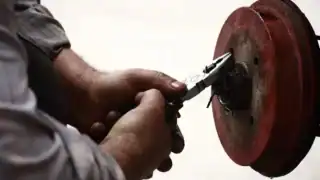
Every Honda brake job starts with a full inspection. We don’t replace parts based on guesswork or arbitrary intervals. We measure pad thickness, inspect rotor condition with precision tools, check brake fluid colour and moisture content, and test the full hydraulic system. Honda vehicles have specific brake specifications, and we follow those precisely.

For a Honda brake mechanic, this means understanding model-specific variations. A Civic’s single-piston front calliper setup is different from a CR-V’s dual-piston design. An older Accord uses different brake fluid recommendations than a newer model. We know these differences, and our diagnostics account for them.

Our Honda brake inspection covers:

  • Visual inspection of pads, rotors, callipers, and brake lines for damage, corrosion, or leaks
  • Brake fluid testing to check for moisture and contamination
  • Rotor runout measurement and assessment of surface condition
  • Calliper function check, including piston movement and seal condition
  • Master cylinder and ABS system diagnosis
  • Test drive to assess pedal feel, responsiveness, and any unusual noises

Once we’ve identified what needs attention, we explain exactly what we found and why. You’ll know the condition of each component, what can be safely left alone, and what must be replaced. If you need new pads and rotors, we tell you that clearly. If one rotor is slightly worn but still safe, we say so rather than replace both. This is how we work: honest assessment, no pressure to buy more than you need.

Honda Brake Parts and Repair Timeframes

The parts you need depend entirely on what we find during inspection. Brake pads alone can be replaced in under an hour. If rotors are damaged, machining or replacement adds time. A master cylinder failure means a longer job and potentially higher cost due to parts and labour. A contaminated brake fluid system might require a full flush.

We use quality brake components with manufacturer warranty. For a Honda, this means parts that meet OEM specifications for material, friction rating, and fitment. Cheap pads might seem to save money upfront, but they wear faster, feel less responsive, and can damage rotors sooner. We source parts that give you reliable braking and longevity.

Turnaround time depends on the scope of work and parts availability. A straightforward pad and rotor job on a Honda usually runs same-day or next-day. Hydraulic system repairs or master cylinder replacement might take longer if parts need ordering. We’ll tell you upfront what to expect before we start.

Why Northmead Honda Owners Choose Star Mechanical Repairs

We’re a family-run workshop, owner-operated and built on the principle that you deserve honest advice and transparent pricing. Brakes are not a place to cut corners or oversell unnecessary work. Star Mechanical Repairs has handled hundreds of Honda brake jobs over more than a decade in the trade. We know what fails on these vehicles, how to diagnose it properly, and how to fix it right the first time.

You won’t hear pressure tactics here. We explain what your Honda needs, show you the damage if there is any, and let you decide. No upselling, no rush. We take the time to do brake work properly, and that’s reflected in our reputation and the trust our customers place in us. Every repair is explained clearly before we begin, so you understand what’s happening and why. Our 4.8-star rating from over 115 reviews reflects the care we take with every vehicle that comes through our doors.

Book Your Honda Brake Inspection in Northmead

If your Honda’s brakes feel different, sound wrong, or you’re overdue for an inspection, don’t wait. Call Us Now to discuss what you’ve noticed, or Book Your Free Inspection online to have our team assess your brake system properly. We’ll give you honest feedback and a clear plan forward.

Other Services

Whatever your needs we have you covered, see some similar services below or click "See All Services" to explore our full service offering.

Honest Mechanics Who Know European Cars

Star Mechanical Repairs is a family-run workshop in Northmead specialising in European vehicles. Owner Sarkis brings over a decade of hands-on experience and a simple promise: quality work, honest advice, at a fair price.

European Vehicle Specialists

Deep experience with BMW, Mercedes, Audi and VW means your car is in the right hands.

No Surprises, No Pressure

Bring your vehicle in and we’ll carry out a thorough inspection before any work begins.

Complete Brake System Warranty

Every brake repair includes warranty coverage for parts and workmanship.

How Honda Brake Repair Works

Your Honda's brakes are inspected, repaired with precision, and tested to ensure safe stopping power before you drive away.

Step 1

Book Your Free Inspection

Book your free inspection to have your Honda's brake system thoroughly assessed by our technicians.

Step 2

Honda Brake System Inspection

We measure pad thickness, rotor condition, fluid integrity, and test Honda brake components using diagnostic equipment.

Step 3

Precision Brake Repair

We replace worn pads, resurface or replace rotors, and service fluid using OEM-spec parts for your Honda model.

Step 4

Safety Test and Handover

We test your brakes on the road, explain the work done, and confirm your Honda is safe to drive.

Rated 4.8 Stars by Our Customers

Verified 5★ Reviews

Quality Parts From Trusted Suppliers

We source quality genuine and reputable aftermarket parts from trusted suppliers, so every repair is backed by manufacturer warranty and built to last.

Book Your Free Inspection

Fill in the form and we'll be in touch to confirm your booking.

Booking Form
  • Vehicle Details
  • Confirm Vehicle
  • Services
  • Contact Details
No Pressure Advice
Work Explained First
Family-Run Workshop

Why Book With Us

Book Your Free Inspection
Drop Off Your Car
We Get to Work
Collect and Drive Away

Common Questions, Honest Answers

Browse the questions below for straightforward answers about our services. If you can't find what you're looking for, give us a call and we'll help.

A Honda brake specialist understands the specific design and common wear patterns of Honda brake systems across their range. Hondas have particular brake characteristics, pad wear profiles, and rotor specifications that differ from other brands. We’ve worked on countless Honda models and know exactly what to look for during inspection, which parts are genuine Honda-equivalent or OEM quality, and how Honda brakes perform under Australian driving conditions. This experience means faster diagnosis and more accurate advice about what your car actually needs.

Most Hondas need brake inspection every 12 months or 15,000 kilometres, whichever comes first. Brake pad wear depends heavily on your driving style, traffic conditions, and terrain. City driving with frequent stops wears pads faster than highway driving. We recommend inspecting your brakes annually to catch wear early and avoid rotor damage. Your Honda’s logbook will outline the manufacturer’s service schedule, and we’ll follow that and flag any issues we spot during routine inspections.

Brake pads are the friction material that grips the rotor to slow your car. Rotors are the metal discs your wheels are mounted on that the pads clamp against. Pads wear out faster and are replaced regularly, usually every 30,000 to 80,000 kilometres depending on driving. Rotors last longer but can warp or develop grooves from extended heat or aggressive braking. If rotors are damaged, they must be resurfaced or replaced. Both parts work together, and both are critical for safe braking.

Squealing brakes are often a warning that pads are wearing thin and need attention soon, though not always an emergency. Some Hondas have wear indicators that squeal intentionally to alert you. However, if the squeal is new, loud, or accompanied by reduced braking response or a spongy pedal, stop driving immediately and have the brakes inspected. Ignoring brake warnings can lead to pad failure, rotor damage, or loss of braking power, all serious safety risks. When in doubt, get them checked without delay.

Australian consumer law under ACCC guidance generally supports vehicle owners having their cars serviced by qualified independent mechanics without losing manufacturer warranty protection. This applies to Hondas as it does any vehicle, provided the servicing is done to the manufacturer’s specifications and with quality parts. However, warranty terms vary between vehicles and model years, so we recommend checking your specific Honda warranty document or contacting Honda Australia directly to confirm your circumstances. We always use quality parts with manufacturer warranties and keep complete service records for your protection.

A standard Honda brake inspection usually takes 30 to 45 minutes. We remove the wheels, measure pad thickness and rotor condition, check brake fluid, and inspect all brake components for wear or damage. If we find issues, we’ll call you with recommendations and a timeframe before proceeding with repairs. Major brake work like pad and rotor replacement typically takes 1 to 2 hours per axle, depending on whether rotors need replacing or just resurfacing. We’ll give you a realistic estimate once we’ve done the inspection.

Watch for a soft or spongy brake pedal, grinding noises when braking, a brake warning light on the dashboard, reduced braking response, or a burning smell after hard braking. Squealing or creaking sounds also warrant inspection. Some signs develop gradually (worn pads), while others appear suddenly (fluid leak or brake failure). Don’t ignore any of these. If you notice any change in how your brakes feel or sound, book an inspection. Catching problems early prevents more expensive damage and keeps you safe on the road.

Certain Honda models are prone to premature rotor wear or brake fade under heavy use. Some generations experience brake fluid contamination faster than others, requiring more frequent fluid changes. Brake pad quality varies depending on whether you use genuine Honda parts or aftermarket alternatives. We see worn callipers and seized slide pins fairly often on higher-kilometre Hondas, which reduce braking efficiency and accelerate pad wear. Knowing your Honda’s age and model helps us predict what to watch for and recommend preventive maintenance before problems develop.

Yes, we can service your brakes regardless of extended warranty status. Independent servicing with quality parts and documented work typically does not void extended warranty coverage, though terms vary between warranty providers. We recommend confirming with your warranty provider that they accept servicing records from independent mechanics. We keep detailed records of every brake service and use OEM-equivalent or genuine parts where appropriate. This documentation protects you and ensures your warranty claim won’t be rejected due to incomplete service history.

Rotors can be resurfaced (turned down on a lathe) if damage is shallow and the remaining thickness meets Honda’s specifications. Heavy scoring, deep grooves, warping, or rust pitting often means resurfacing won’t restore safe braking. Thin rotors also overheat more easily, which increases fade and brake failure risk. We measure rotor thickness and surface condition during inspection to determine whether resurfacing is viable. In Northmead, we have access to rotor resurfacing equipment, but if replacement is needed, we’ll explain why and source quality parts matched to your Honda’s specifications.

Brake service costs depend on what your Honda needs. A simple pad replacement costs less than a full brake overhaul with new pads, rotors, and fluid flush. Labour time, parts quality, and whether resurfacing is possible all affect the final bill. We don’t quote blind or surprise you with hidden costs. Once we inspect your brakes, we’ll explain exactly what’s needed, why, and what it will cost before we start work. Our approach is honest advice at fair prices, not upselling unnecessary work. Book your free inspection and we’ll give you a clear picture.

Both genuine Honda parts and quality OEM-equivalent parts work well, and the choice often depends on budget and preference. Genuine Honda parts carry full Honda warranty backing and are engineered specifically for your model. Quality aftermarket parts from reputable manufacturers offer good performance at lower cost. We stock both options and can discuss the pros and cons for your situation. What matters most is that parts meet Australian safety standards and are fitted correctly. We never compromise on quality just to cut costs, and we’ll tell you honestly which option suits your Honda and driving needs.

Continue to site